


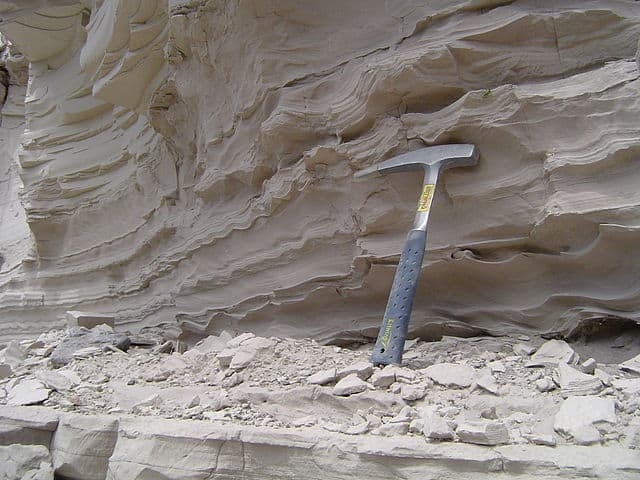
Whether you are an amateur eager to start rockhounding or a professional geologist working in the field, a rock hammer is an essential tool. In this guide, we’ll cover everything you need to know to choose the best rock hammer and other geological tools for your needs.
Table of Contents
How to use a rock hammer or rock pick
Rock hammers are primarily used to crack, split, or fracture rocks. They can be used to break open specimens to reveal their crystalline structure, which is useful for rock and mineral identification. In addition, splitting a specimen can make it visually more appealing by exposing its internal features.
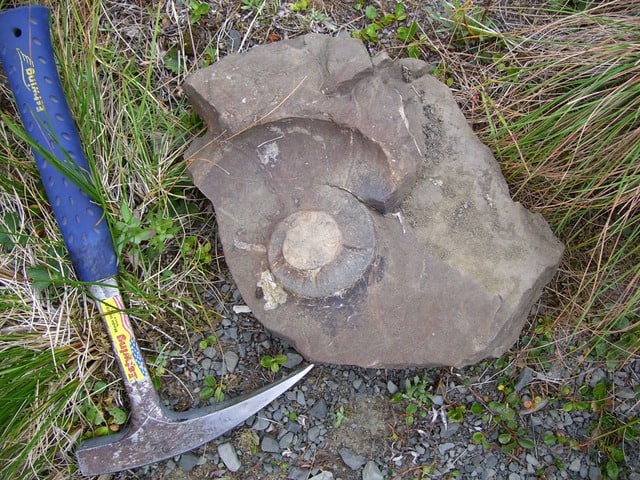
Rock hammers are great to pry apart layers of sedimentary rocks and sediments, which is useful for paleontologists and fossil hunters. They are commonly used to split shale or slate to reveal fossil impressions. In the field, rock hammers are also useful for clearing loose rubble, removing debris, and extracting hard-to-reach specimens.
Moreover, rock hammers can be used to strike a rock directly, and the shape of the head plays a crucial role in the force of impact. For example, a rock pick with a pointed tip will concentrate the force on a smaller surface area to deliver a greater power. The length and weight of the hammer will also significantly influence its striking strength and control.


How to choose the best rock hammer or rock pick
There are many types of rock hammers available on the market, and this variety can be confusing for beginners. Choosing the right hammer depends largely on how and where you plan to use it. Some rock hammers are designed for specific rock types, making intended use a crucial factor to evaluate.
You should also consider the type of rockhounding you plan to do. If you expect to hike long distances, a lighter hammer may be preferable. On the other hand, a heavier hammer is more suitable when working with large or hard rocks.


Check this Rockhounding and Fossil Hunting Geology Tool Kit on Amazon
Because rock hammers are subjected to intense use, high-quality materials are essential. Most good rock hammers are forged from a single piece of hardened steel for maximum durability. Handles are typically made of rubber or leather, and their quality directly affects grip comfort and shock absorption.
Well-balanced rock hammers improve accuracy, reduce fatigue, and enhance overall usability. While price is an important consideration, spending a little extra on a high-quality hammer often results in better durability and long-term value.


Types of rock hammers and other geological tools
There is a wide variety of rock hammers and geological tools available. The main categories include:
- Pointed-tip rock picks
- Chisel-edge rock hammers
- Crack hammers
- Pry bars
- Geological (paleo) picks
Let’s explore each type in detail, including how they are used and which options offer the best value.


Best rock hammers and rock picks
Most rock hammers and picks measure between 11 and 13 inches (28–33 cm) in length. A 16 oz (450 g) hammer is sufficient for most rock types, though harder metamorphic or igneous rocks may require more force.
Smaller hammers weighing 8 oz (225 g) or less are also available and are great options for children or light use.
Rock hammer heads have two sides:
- A flat, square striking face, used to break rocks
- A chisel or pointed end, which determines whether the tool is considered a rock hammer or a rock pick
Chisel-edge models are generally called rock hammers, while pointed-tip models are commonly referred to as rock picks. Let’s now see the differences between these two types rock hammers and the best options for category.
Best pointed-tip rock hammers (rock picks)
Pointed-tip rock hammers are best suited for hard rocks, including metamorphic, igneous, and hard sedimentary rocks. The pointed-tip focuses impact force on a small area, making it ideal for cracking or splitting specimens to reveal their internal composition.
Let’s now have a look at some of the best rock picks:
Efficere 22 oz pointed-tip rock hammer
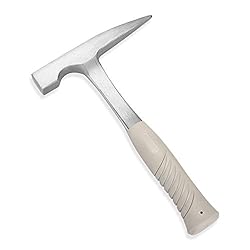
The Efficere 22 oz pointed-tip rock hammer is a popular choice on Amazon, and has a rating of 4.6 out of 5 rating from over 4,000 customer reviews. This rock hammer delivers a strong balance of performance, durability, and affordability. No wonder why it is considered one of the best entry-level rock picks.

Check the Efficere 22-Ounce/11-Inch Rock Pick on Amazon
Quality & design
This rock pick is drop-forged from a single piece of steel, ensuring solid strength and long-term durability. The one-piece construction prevents head loosening, which is a common failure point on cheaper multi-piece hammers. It features a polished finish with a rust-resistant coating, helping protect the steel during outdoor use and storage.
The hammer includes a square striking face for controlled blows and a pointed tip designed to concentrate impact force on a small surface area, which is ideal for cracking rocks and exposing mineral structures.
Comfort & handling
At 22 oz with an 11-inch overall length (625g and 28 cm), this rock pick sits right in the sweet spot for general rockhounding. It is heavy enough to deliver meaningful impact while remaining light enough for extended use without excessive fatigue.
The rubber-coated handle provides a secure, non-slip grip and contributes to the hammer’s good overall balance. This makes it especially good for beginners who want a comfortable and forgiving tool while learning proper striking technique.
Field performance
In the field, the Efficere rock pick performs well on sedimentary rocks, moderately hard formations, and smaller specimens. The pointed tip helps focus force efficiently, while the flat head is useful for controlled strikes and light chiselling.
That said, some users have reported that the rubber sleeve may loosen over time, and a few noted minor metal deformation when used intensively on very hard rocks, such as granite or basalt. These limitations are typical for entry-level tools and do not affect their effectiveness for casual or intermediate use.
👍 Pros
- Rated 4.6 out of 5 (4,000+ reviews)
- One-piece, drop-forged steel construction
- Rust-resistant polished finish
- Comfortable rubber grip with good balance
- Excellent performance for beginners and hobbyists
- Outstanding value for about $20
👎 Cons
- Rubber handle sleeve may loosen with heavy use
- Not ideal for repeated heavy strikes on very hard igneous rocks
- Pointed-tip may dull faster than premium professional picks
Verdict
The Efficere 22 oz pointed-tip rock hammer is an excellent value geological tool and one of the best choices for beginners, students, and rockhounding amateurs. While it doesn’t replace high-end professional rock picks, it offers reliable performance, solid construction, and great comfort at an affordable price.
This hammer is a smart choice if you’re just getting started with rockhounding, fossil hunting, or doing light geological fieldwork. For frequent use on very hard rocks, upgrading to a premium pick can be considered, but for most users, this tool gets the job done.
Estwing 22 oz pointed-tip rock hammer (E3-22P rock pick)
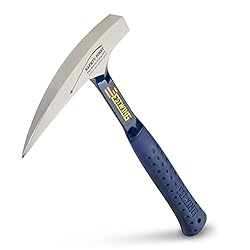
The Estwing 22‑Ounce Pointed-Tip Rock Hammer is a professional-grade geological tool that has earned an outstanding rating of 4.8 out of 5 from over 5,000 verified customer reviews. It is widely trusted by experienced geologists and professional prospectors. Estwing has built a reputation as a synonym for quality, and this rock pick is a prime example of why.
Proudly made in the USA from high-quality American steel, this hammer delivers exceptional durability, balance, and precision, making it ideal for most types of fieldwork.
Click Here to See this Estwing Rock Pick (22 oz) with Pointed-Tip on Amazon
Quality & design
Estwing’s hallmark is its one-piece forged steel construction, meaning the head and handle are forged together from a single piece of steel. This design eliminates weak points, providing unmatched durability and reducing the risk of head loosening, which is a common problem with cheaper multi-piece hammers.
The hammer features a pointed-tip for focused impact and a flat striking face for controlled blows. The patented shock-reduction rubber grip absorbs up to 70% of the vibration, reducing hand fatigue during prolonged use. For those who prefer a classic feel, Estwing also offers versions with a genuine leather grip.
At 22 ounces (~625 g) and an overall length of 11 inches (~28 cm), this rock pick offers the perfect balance of power and control, allowing for effective strikes without excessive effort.
Field performance
In the field, the Estwing pointed-tip rock hammer performs reliably across a variety of rocks ranging from sedimentary layers to medium-hard igneous formations. The pointed-tip efficiently penetrates fractures and weak points, while the flat face delivers controlled strikes for splitting rocks. Experienced users consistently report that the hammer feels well-balanced and comfortable, even during extended use.
👍 Pros
- Rated 4.8 out of 5 (5,000+ reviews)
- Excellent value for a professional-grade hammer for about $40
- High-quality one-piece American steel construction: built to last a lifetime
- Patented shock-reduction grip: reduces hand fatigue and vibration by 70%
- Balanced weight and length: ideal for fieldwork
- Available with rubber or leather grips to suit personal preference
👎 Cons
- Higher price than other entry-level rock picks
- Not designed for heavy-duty tasks: pair with a crack hammer for very hard rock
Verdict
The Estwing 22 oz rock pick is a top-tier choice for anyone serious about rockhounding, geology, or fossil collecting. Its one-piece forged steel construction, patented shock-reducing grip, and precise balance make it a favorite among hobbyists and professionals.
While more expensive than budget models, its durability, performance, and comfort justify the cost, making it an excellent investment for frequent fieldwork. For those seeking a tool that performs like a professional-grade hammer for about $40, this Estwing model is hard to beat.
Best chisel-edge rock hammers (bricklayer’s / mason’s hammer)
Chisel-edge rock hammers are specifically designed for working with soft sedimentary rocks, such as shale, slate, and limestone. The flat, sharp edge allows you to pry apart layered materials with precision, making it ideal for uncovering fossils, delicate mineral formations, and stratigraphic features. Unlike pointed-tip rock hammers, chisel-edge hammers provide greater leverage for splitting rocks along natural planes, reducing the risk of damaging fragile specimens.
In addition to precision work, chisel-edge hammers are versatile field tools. They can be used to clear loose rocks, debris, and soil from dig sites. Many geologists and fossil hunters rely on chisel-edge hammers for both careful excavation and general rockhounding.
26 oz chisel-edge rock hammer
This 28 oz chisel-edge rock hammer is an excellent budget-friendly alternative for amateur geologists and fossil hunters who need a reliable hammer without paying premium prices. Despite its low cost, it delivers solid performance. With an average rating of 4.7 out of 5 from nearly 500 customer reviews, it has proven to be a popular and well-regarded choice for rockhounding and light construction tasks.

Click Here to See this 26 oz Chisel-Edge Rock Hammer on Amazon
Quality & design
This hammer features a drop-forged steel head built to handle repeated impacts. The 28 oz head provides added striking force compared to standard 20–22 oz models, which is particularly helpful when working with compacted or layered materials. Its chisel edge is ideal for prying and splitting, while the flat striking face supports general hammering tasks.
Field performance
In the field, this hammer performs best on soft to medium sedimentary rocks such as shale, slate, limestone, and sandstone. The heavier head allows for efficient material removal and faster specimen preparation, reducing the number of strikes needed when clearing debris or separating layers.
The chisel edge offers good leverage for lifting and peeling rock layers, making it especially useful for fossil hunting and surface prospecting. While the added weight improves impact power, it is less convenient for long hikes or extended use compared to lighter hammers.
Comfort & handling
The shock-reduction rubber grip helps absorb vibration and improves control, making the hammer more comfortable to use during prolonged sessions. Although the grip is more basic than those found on premium professional models, it provides adequate cushioning and a secure, non-slip hold even in wet conditions.
👍 Pros
- Rated 4.7 out of 5 (400+ reviews)
- Outstanding value for less than $20
- Heavier 28 oz head delivers increased striking force
- Chisel-edge ideal for fossil work and layered materials
👎 Cons
- Heavier weight can cause fatigue over long periods
- Grip quality is functional but not premium
- Not intended for precision work on very hard igneous rocks
Verdict
This 28 oz chisel-edge rock hammer is a solid, field-ready tool that offers great performance at an accessible price point. With good user ratings, effective shock reduction, and a powerful head design, it’s an excellent choice for beginners and hobbyists who want a good hammer for sedimentary rocks without overspending.
20 oz Estwing chisel-edge rock hammer (E3-20BLC)
If you want a professional-grade chisel-edge hammer, this model from Estwing is a perfect choice. This bricklayer’s / mason’s hammer is built with the same quality and durability that has made Estwing tools popular among professionals for decades. With an outstanding 4.8-star rating from nearly 1,500 customer reviews, it has earned a strong reputation for exceptional comfort, balance, and long-lasting performance for both fieldwork and heavy-duty projects.
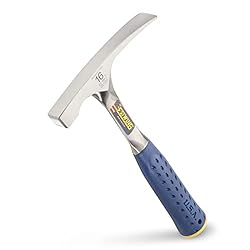
Check the Estwing Bricklayer’s/Mason’s Hammer (16 oz) on Amazon
Quality & design
This hammer is forged from a single piece of solid American steel, with both the head and handle fully polished for strength and durability. Its bonded and molded Shock Reduction Grip® delivers excellent vibration dampening and a secure hold, reducing hand fatigue during prolonged use. A patented nylon end cap adds durability at impact points where many other tools fail.
The design includes a smooth hammer face paired with a chisel edge, making it versatile for splitting and trimming tasks, whether you’re working stones or clearing sedimentary layers in the field.
Field performance
In the field, this Estwing hammer feels balanced and powerful. The chisel edge excels at prying and splitting softer rocks like shale or limestone, and the smooth face delivers strong, controlled strikes. The 20 oz version is a great middle ground, which is heavy enough to make solid blows but not so heavy that it tires the user quickly. It is therefore well suited for geology and paleontology fieldwork in addition to construction tasks.
Comfort & handling
The patented Shock Reduction Grip® technology helps soften repeated impact vibrations, which is especially appreciated on longer outings or heavy use days. While some may prefer an even heavier hammer for larger rocks or masonry work, this model strikes a comfortable compromise between power, weight, and comfort.
In addition, this hammer is available in several head weights (16 oz, 20 oz, and 24 oz), allowing you to choose the balance of power and control that suits your needs.
👍 Pros
- Rated 4.8 out of 5 (1,500+ reviews)
- One-piece forged steel design: exceptionally durable and long-lasting.
- Patented Shock Reduction Grip® reduces vibration and fatigue.
- Smooth face and chisel edge for versatile use in geology and masonry.
- 20 oz model: versatile and great for extended use.
👎 Cons
- Not as specialized for ultra-heavy rock breaking compared with dedicated picks or sledges.
- Premium quality means a slightly higher price point than basic budget hammers.
Verdict
The Estwing bricklayer’s / mason’s hammer stands out as a premium, professional-grade chisel-edge tool for working with soft sedimentary rocks. Designed for durability and long-term use, this Estwing hammer is built to last for decades while delivering exceptional strength, comfort, balance, and reliable field performance.
Best crack hammers (drilling / engineer’s / sledge hammer)
Crack hammers are essential tools for rockhounding and mineral collecting. Designed to deliver maximum impact force, sledge hammers provide the weight and power needed to break through hard rocks that standard rock picks can’t handle. They are especially effective on igneous formations, such as pegmatite vugs, where controlled force is required to expose crystals like amethyst.
Beyond direct striking, crack hammers excel when paired with chisels or pry bars, allowing you to split, wedge, or pry open rock formations with precision and efficiency. If your goal is to tackle tougher material in the field, a crack hammer is a must-have tool. Let’s take a look at some of the best crack hammers available.
Sledge hammer with fiberglass handle (3-pound Estwing MRF3LB)
With an impressive 4.8 out of 5 rating from over 9,500 reviews, this drilling/crack hammer is a popular and reliable choice for beginners. Priced at about $20, it delivers excellent value for an entry-level tool without sacrificing performance. Furthermore, its forged steel head provides durability and consistent striking power.
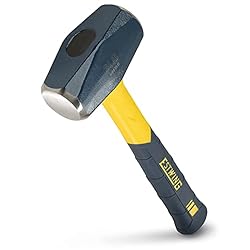
Check this Drilling/Crack Hammer – 3-Pound Sledge with Fiberglass Handle on Amazon
The fiberglass handle with a non-slip grip improves comfort and control, making it well suited for both cracking rocks and driving chisels. At 3 lb (1.36 kg) and 11 inches (27.9 cm) long, it offers an ideal balance of weight and maneuverability. While the fiberglass handle may not feel as robust as a one-piece forged steel design, it does help to reduce vibration. For those who prioritize portability or prefer a lighter tool, a 2-pound version is also available.
Crack hammer with one-piece steel design (3-Pound Estwing B3-3LB)
While it may look similar to the previous model, the Estwing B3-3LB drilling/crack hammer offers several key advantages that make it the preferred choice for experienced geologists and professionals.
The most significant differences lie in construction and comfort. Forged from a single piece of solid American steel, the crack hammer B3-3LB provides exceptional strength, balance, and long-term durability. Its blue UV-resistant coating protects the steel while maintaining a sleek, professional finish. Unlike the previous Estwing model with a fiberglass handle made in Taiwan, this hammer is proudly made in the USA with high-quality craftsmanship.
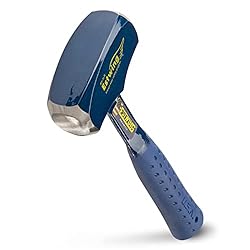
Click here to see the Estwing Drilling/Crack Hammer – 3-Pound Sledge – B3-3LB
Another standout feature is Estwing’s patented Shock Reduction Grip®, which reduces impact vibration by up to 70%, significantly improving comfort during extended use, especially when repeatedly striking chisels or star drills. Furthermore, the hammer is available in 2 lb, 3 lb, and 4 lb options, allowing users to choose the ideal weight for their needs.
With an impressive 4.9 out of 5-star rating from over 3,000 reviews, the crack hammer B3-3LB has earned a strong reputation for reliability and field performance. Priced at less than $35, it delivers professional-grade quality at an excellent value. In short, the Estwing B3-3LB drilling/crack hammer stands out as the better choice overall, offering unmatched durability, comfort, and versatility for both beginners and experimented geologists.
Estwing 4-pound Big Blue drilling/crack hammer with long handle (B3-4LBL)
The Estwing Big Blue B3-4LBL is a powerful, professional-grade drilling/crack hammer designed for demanding geological and rockhounding work. It boasts an impressive 4.9 out of 5 rating on Amazon from over 3,000 reviews, again reflecting its excellent performance.
This model features a 4-pound (1.8 kg) forged steel head paired with a 16-inch (40 cm) handle, delivering exceptional striking power while maintaining excellent balance and control. Like all Estwing geological tools, it is forged from a single piece of solid American steel and finished with the brand’s signature blue UV-resistant coating for added protection and longevity.
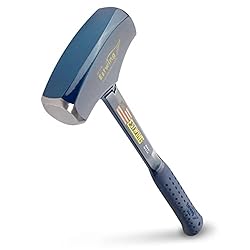
Check this Estwing BIG BLUE Drilling/Crack Hammer – 4-Pound Long Handle Sledge – B3-4LBL on Amazon
Despite its increased weight and longer handle, the Big Blue remains surprisingly easy to carry and maneuver in the field, making it well suited for cracking hard igneous and metamorphic rocks. The longer handle provides increased leverage without sacrificing precision, allowing you to break tough hard rocks with fewer, more effective strikes.
In the $50 price range, the Estwing Big Blue offers outstanding value for a heavy-duty crack hammer. If you’re looking for a high-impact, long-lasting tool capable of tackling the toughest rockhounding challenges, this hammer is an excellent addition to any serious geologist’s toolkit.
Pry bar
A pry bar is another essential tool in a geologist’s toolkit, offering exceptional versatility and power in the field. Its pointed tip is ideal for breaking, prying, and levering stubborn rock, making it especially useful for tasks such as extracting agate seams from host rock or prying open quartz veins. The sharp point can also be used to dig into rubble, soil, or loose material, helping expose specimens more efficiently.
For maximum effectiveness, a pry bar can be used in combination with a crack hammer, allowing you to apply controlled leverage after cracking a rock. This pairing significantly increases efficiency and makes short work of even the toughest formations. Whether you’re rockhounding or prospecting, a pry bar is a powerful, time-saving tool that can handle rocks most hammers alone cannot.
Estwing 18-inch gad pry bar with pointed tip and chisel end (GP-18)
The Estwing GP-18 gad pry bar is an outstanding geological tool, rated 4.8 out of 5 stars on Amazon from over 1,000 reviews. Designed for strength and portability, this pry bar measures 18 inches (46 cm) in length while weighing just 20 oz (0.5 kg), thanks to its efficient I-shape design. The lightweight construction makes it exceptionally easy to carry, and a great companion for extended rockhounding trips.
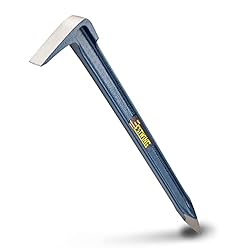
In the field, the Estwing pry bar excels at moving rubble, clearing dirt, and prying rocks. The pointed tip is ideal for penetrating cracks and seams, while the chisel end is perfect for digging through compacted debris and layered rock. The chisel end also serves as an excellent leverage point, allowing you to shift and reposition surprisingly large boulders with minimal effort.
Overall, the Estwing GP-18 is a compact tool that punches well above its weight. If you need a reliable pry bar for geological work, this model is a must-have addition to your toolkit.

Geological (paleo) pick
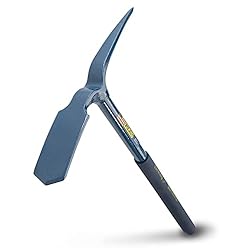
Last but certainly not least, the geological (or paleo) pick is one of the most versatile tools in a geologist’s toolkit. The chisel end is designed for prying and lifting rocks, as well as clearing rubble. It is especially useful for fossil and rock hunting, as the chisel edge can easily separate layered sedimentary rocks to expose fossil specimens with precision and control.
The pointed tip, on the other hand, is ideal for chipping, cracking, and breaking harder rock. It concentrates force on a small area, making it effective for tough, compact formations. Thanks to this dual-purpose design, the geological pick is a powerful all-around tool capable of handling both delicate fossil work and demanding, heavy-duty geological tasks.
25-inch geological pick (Estwing GP-100)
The Estwing GP-100 Geo/Paleo pick is a well-built and highly regarded geological tool, with a rating of 4.8 out of 5 stars on Amazon and over 1,500 reviews. Designed for serious fieldwork, this pick measures 25.5 inches (65 cm) in length and weighs 4 lb (1.8 kg), offering an excellent balance between power and control.
Check this Estwing Geo/Paleo Rock Pick – 25″ Geological Tool – GP-100 on Amazon
Overall, this geological pick offers excellent value for the price and is a great choice for both rockhounding and paleontology. If you’re looking for a versatile, heavy-duty geological pick that won’t let you down, this model is a strong contender.
The GP-100 geological pick delivers outstanding durability and long-term reliability. Despite its solid construction, the pick remains light enough to transport easily, yet powerful enough to handle demanding tasks such as prying, breaking, and excavating rock.
Rock hammer holster and sheath
A rock hammer holster is an essential accessory for both chisel-edge and pointed-tip rock picks. Not only does a sheath protect your hammer from unnecessary wear, but it also makes carrying the tool in the field far safer and more convenient, especially during long rockhounding trips.

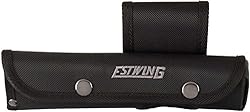
Check this Estwing #22 Rock hammer holster sheath – Fits E30, E30SE, E13P and E13PM
Some users may notice light rust developing on their geological tools over time. This is completely normal for high-carbon steel tools designed for heavy-duty fieldwork. While surface rust may affect appearance, it does not compromise performance or durability.
Safety equipment for rockhounding
When rockhounding or fossil hunting, always wear the following protective equipment:
- Safety goggles (to protect against flying rock fragments)
- Gloves
- A hard hat, especially in unstable or rocky areas
Pro tip for geologists
Include your rock hammer in field photographs. Because its size is standardized, it provides a useful scale reference for geological formations and specimens.
Conclusion
Rockhounding involves much more than simply breaking rocks. Each geological tool serves a specific purpose, and choosing the right one can significantly improve your fieldwork and efficiency.
With this guide, you should now feel confident selecting the perfect rock hammer or geological tool for your next field trip.
Please share this post and feel free to ask questions in the comment section below. Before leaving, you can also have a look at my previous post to find the best sluice box for gold mining, learn how to polish rocks or to find the best rock tumbler grit and supplies.

Photo cover credit: Matt Affolter